
India / Sports & apps
Cricket rules and scores: overs, wickets and match formats
Cricket numbers make sense when the format and innings stay visible. A score, required rate and probable lineup describe different parts of the match.
On this page
Runs and wickets
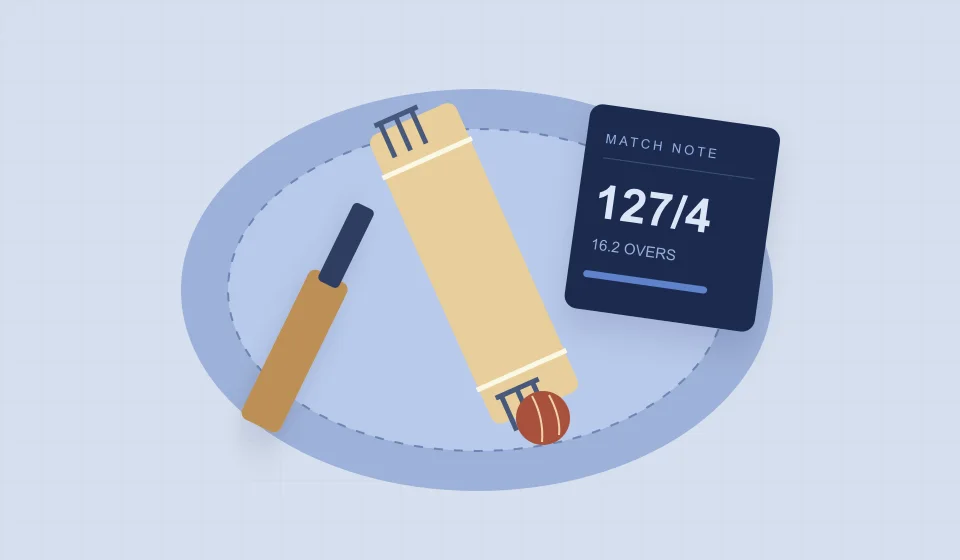
A score of 84/3 means 84 runs for three wickets. In a chase, retain the target and remaining legal balls. Extras can contribute to the team total without belonging to a batter’s runs.
Overs are not decimal fractions
In a six-ball format, 12.4 overs represents 76 legal balls. For a run-rate denominator that is 12⅔ overs, not 12.4. Wides and no-balls can add deliveries without completing one of the six legal balls.
Test, ODI and T20 keep different constraints
A limited-overs match has an innings allocation set by its conditions, while multi-day cricket has another structure. Revised targets, all-out innings and interruptions need the competition’s rules. Do not infer a target from a generic calculator after rain.
Squad, probable XI and announced XI
A squad includes options. A probable XI is a forecast. The announced team is a statement at a known time; substitution and impact-player rules may still need the competition conditions. Preserve the earlier forecast if you want to compare it with the announcement.
Required rate: a remaining task
Illustrative chase: 48 runs needed from 30 legal balls is 9.60 runs per over. That is a rate needed, not a 9.60% or any other probability of winning. Wickets, conditions and future events still matter.
Use the score service for the right record
Commentary preserves sequence; scorecard groups batting and bowling; schedule identifies fixtures; archive retains older years. A search snippet may show an earlier state.
Cricbuzz live scoreCricbuzz schedule and ISTCOME cricket app recordsOnline Casino
External service. Check its terms and eligibility.
Visit partnerSources & scope
Sources describe their own products and rules. A dated reference does not establish current availability, installation or an account outcome.